
Jefferson Davis Criminal Court Records
Criminal court records in Jefferson Davis Parish are filed and maintained through the Clerk of Court criminal department for the 31st Judicial District Court. The District Attorney files the charging document, such as a bill of information or bill of indictment. The Clerk criminal department files those papers, criminal motions, subpoenas, notices to counsel, minute entries, evidence and exhibits offered in court, judgments, and sentencing records.
The 31st Judicial District Court has original civil and criminal jurisdiction in Jefferson Davis Parish. Limited local matters, traffic cases, and municipal issues may involve city courts or lower courts, but adult felony prosecutions and many serious criminal matters route through District Court. The Louisiana Supreme Court sits at the top of the state judiciary, and appeals from Jefferson Davis Parish go through the Louisiana Third Circuit Court of Appeal.
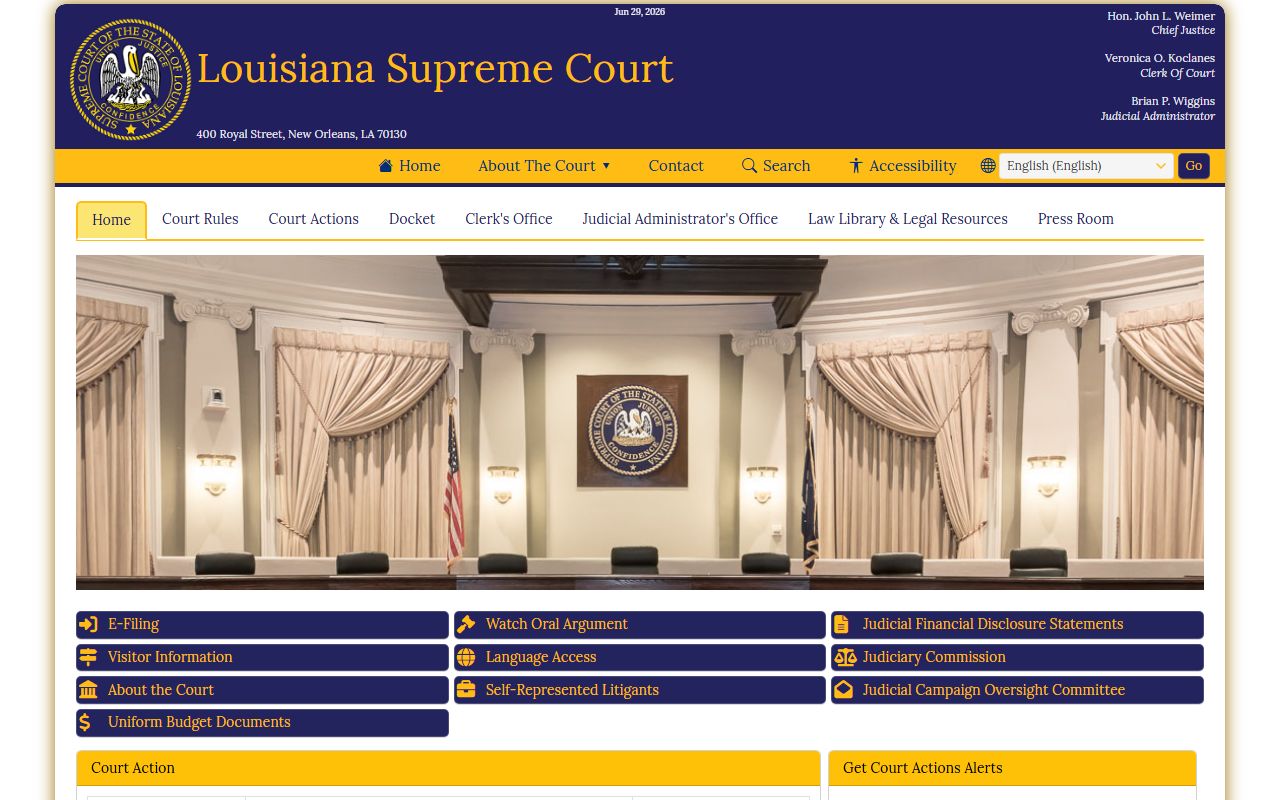
The state-court hierarchy helps explain why local criminal records begin in District Court but can move to appellate courts later.
Search Jefferson Davis Criminal Court Records
No free full public Jefferson Davis Parish criminal case-search portal was located. For current criminal case files, minute extracts, copy requests, searches, and certified copies, the main access channel is the Clerk of Court civil, criminal, and probate department at 337-824-8340. ClerkConnect is available for civil and criminal electronic filing by login, but it should not be treated as a public criminal records database.
- Start with the defendant name, approximate filing date, charge, arrest date, or case number if known.
- Call or visit the Clerk criminal department to ask for the search, copy, or certified-copy process.
- Ask whether the record is public, sealed, expunged, juvenile, or otherwise restricted before paying fees.
- Request a criminal minute extract if the needed fact is a court-action summary rather than full pleadings.
- For custody, bail, or current charge questions after an arrest, confirm with jail staff before relying on roster text.
Jail and booking information can point to a case, but the outcome belongs in the court file. The booking side is handled separately from Jefferson Davis Parish arrest records and court charges.
Jefferson Davis Criminal Case Flow
A criminal court record grows as the case moves. The first visible criminal filing may be the bill of information or indictment. Arraignment follows, then pretrial motions, subpoenas, notices, hearings, plea negotiations, trial settings, verdict or plea, disposition, and sentencing. Each stage may create a docket entry, minute entry, order, filing, or exhibit record.
Case flow: Charges Filed › Arraignment › Pretrial / Motions › Plea or Trial › Disposition › Sentencing
| Stage | What Happens |
|---|---|
| Charges filed | The DA files a bill of information or indictment, and the Clerk opens or updates the criminal case file. |
| Arraignment | Charges are addressed in court, and the defendant enters a plea or receives further setting instructions. |
| Pretrial / motions | Parties file motions, subpoenas, notices, and other papers that become part of the record. |
| Plea or trial | The case resolves by plea, trial verdict, dismissal, or other court action. |
| Disposition and sentencing | The final result and sentence are entered in minutes, judgment, or sentencing papers. |
The Louisiana Supreme Court Law Library describes limited courts such as justice of the peace courts.

That lower-court context helps separate local misdemeanor or traffic handling from District Court criminal case files.
Jefferson Davis Criminal Record Fields
The most important criminal court record fields are the ones that separate an accusation from a result. A Jefferson Davis Parish criminal record may show charges as filed, later amended charges, plea entries, motion rulings, hearing dates, minute entries, verdicts, dismissals, sentencing minutes, bonds or costs, and restricted-access indicators. The Clerk charges $15 for a criminal minute extract and $20 per name for a ten-year criminal search.
| Field | What It Shows |
|---|---|
| Case number | The Clerk number used to locate the criminal file. |
| Defendant | The person accused in the criminal case. |
| Charging document | Bill of information, bill of indictment, or related filed charge paper. |
| Charges | The offenses filed by the DA, including amendments or reductions if recorded. |
| Plea | Formal response, such as guilty, not guilty, or later plea change. |
| Minute entries | The Clerk's official summary of hearings and court action. |
| Disposition | Dismissed, guilty, not guilty, nolle prosequi, plea, verdict, or other result. |
| Sentence | Court-imposed punishment after conviction, when applicable. |
Charges vs Convictions
A charge is an accusation filed in court. A conviction is a result after a guilty plea, verdict, or other conviction event. A Jefferson Davis Parish criminal court record can show charges that were amended, reduced, dismissed, or ended without conviction. That is why the disposition and sentence fields matter as much as the original charge list.
| Charge | Conviction | |
|---|---|---|
| Stage | Filed accusation | Final or current criminal result |
| Proof level | Based on charging decision and probable cause process | Based on plea, verdict, or judgment |
| Record meaning | May remain even if dropped or reduced | Shows guilt or accepted plea outcome |
| Where to verify | Charging document and docket | Disposition, judgment, minutes, and sentencing records |
Public Access to Jefferson Davis Criminal Records
Louisiana public-records law supports inspection and copying of many public records, but criminal court records remain subject to court orders and special limits. Louisiana R.S. 44:1 defines public records. Louisiana R.S. 44:31 gives adults the right to inspect, copy, or reproduce public records unless another law restricts access. Louisiana R.S. 44:32 explains custodian duties and copy rules.
Louisiana R.S. 44:1 is one of the baseline statutes for understanding criminal court record access.
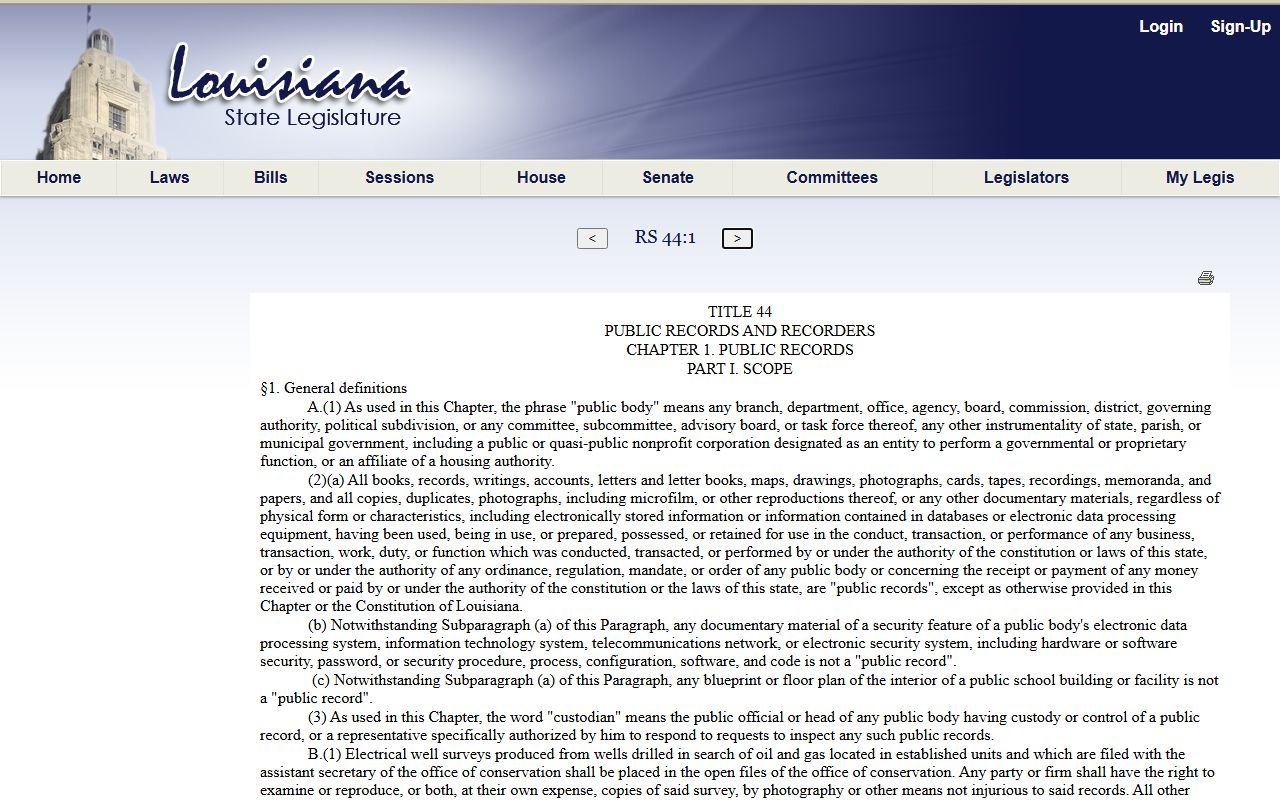
That definition helps identify when a court or agency record may fall within the public-records framework.
Louisiana R.S. 44:31 states the general adult inspection and copying right.
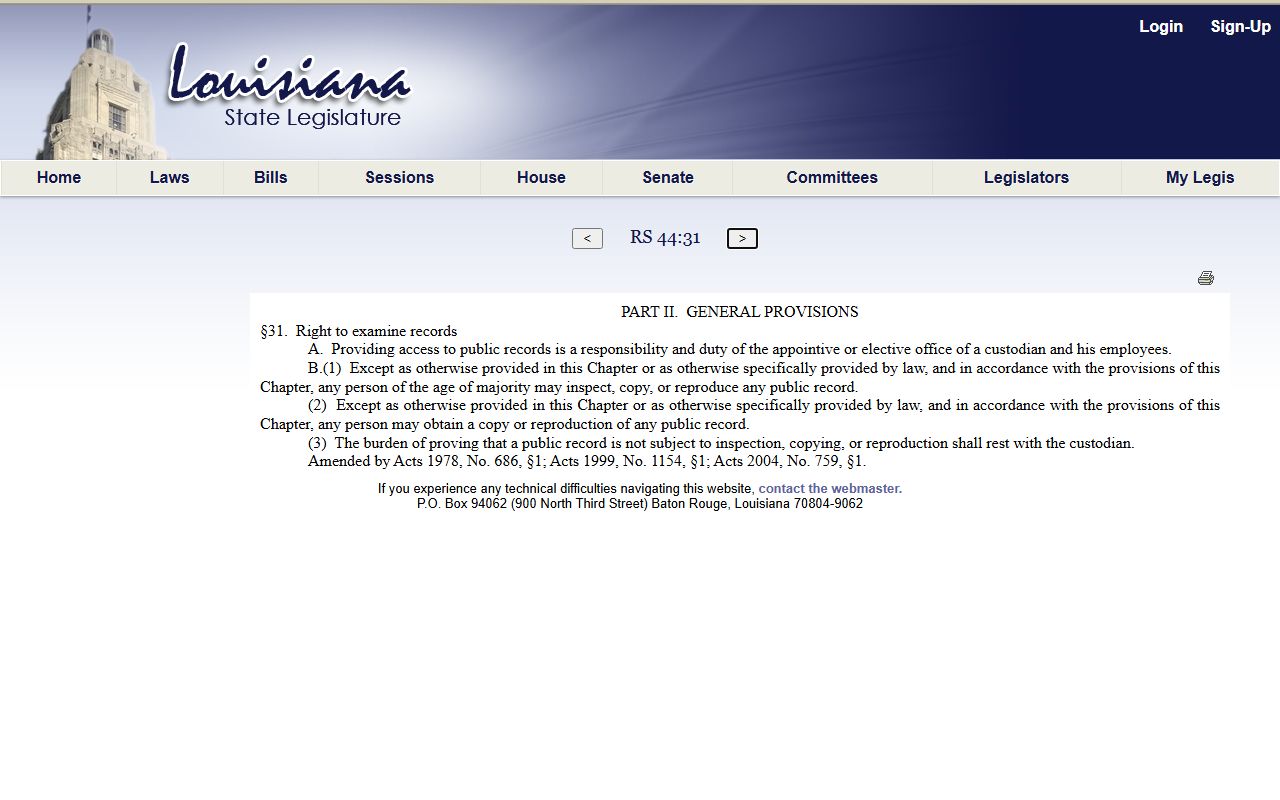
The right is broad, but sealed, expunged, juvenile, and protected records still require separate analysis.
Louisiana R.S. 44:32 addresses how custodians handle copying and production duties.
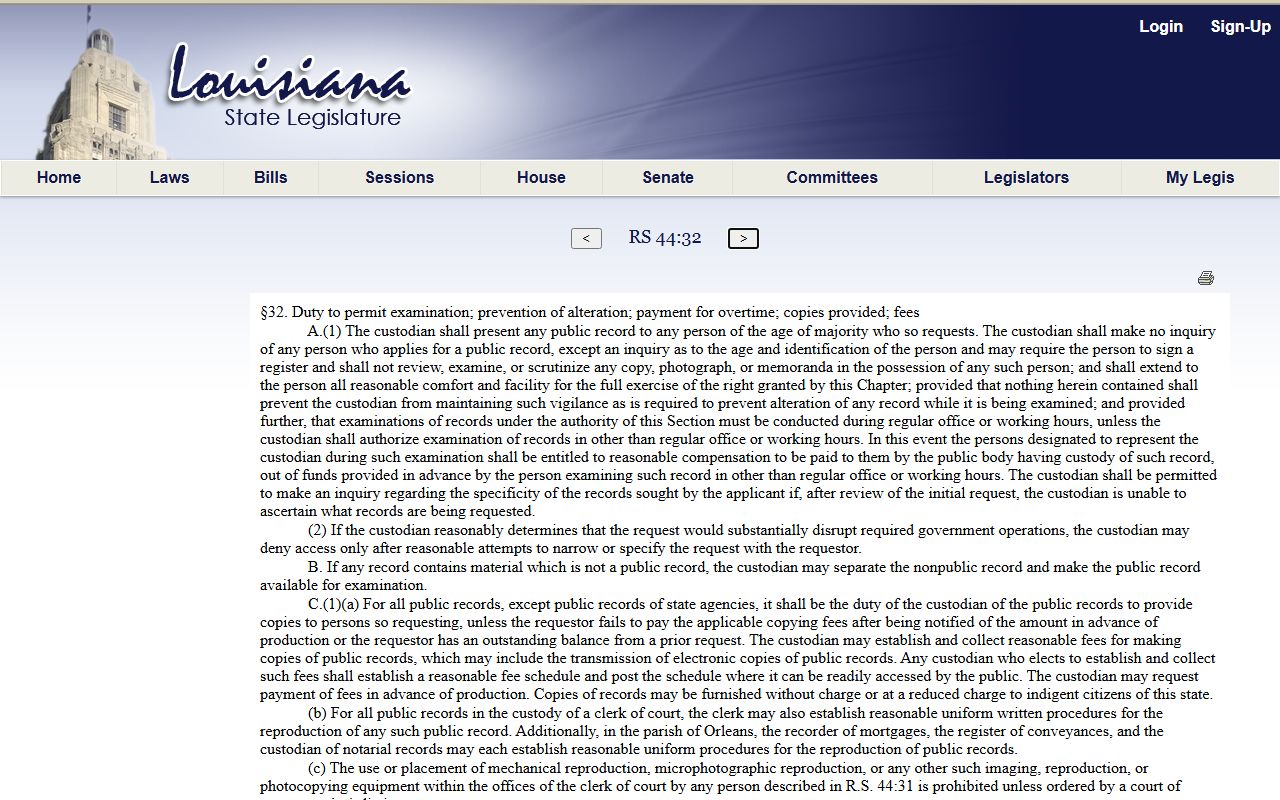
For Jefferson Davis Parish case files, the Clerk is the practical custodian for court filings and minutes.
Sealed vs Expunged Criminal Records
Sealed and expunged records are not the same. A sealed Jefferson Davis Parish criminal record is hidden from ordinary public inspection because of a court order or law. An expunged record is removed from public access under Louisiana criminal procedure, but it is not destroyed. Certain agencies may still have access under state law.
| Sealed | Expunged | |
|---|---|---|
| Public view | Hidden from ordinary public searches | Removed from public access |
| Record status | Still exists under court control | Still exists, but access is limited |
| Access route | Party, attorney, statute, or court order | Allowed agencies or court process under expungement law |
| Key law | Court order or specific confidentiality rule | Louisiana Code of Criminal Procedure arts. 971 through 999 |
Louisiana Code of Criminal Procedure art. 971 defines expungement as removal from public access without destruction.
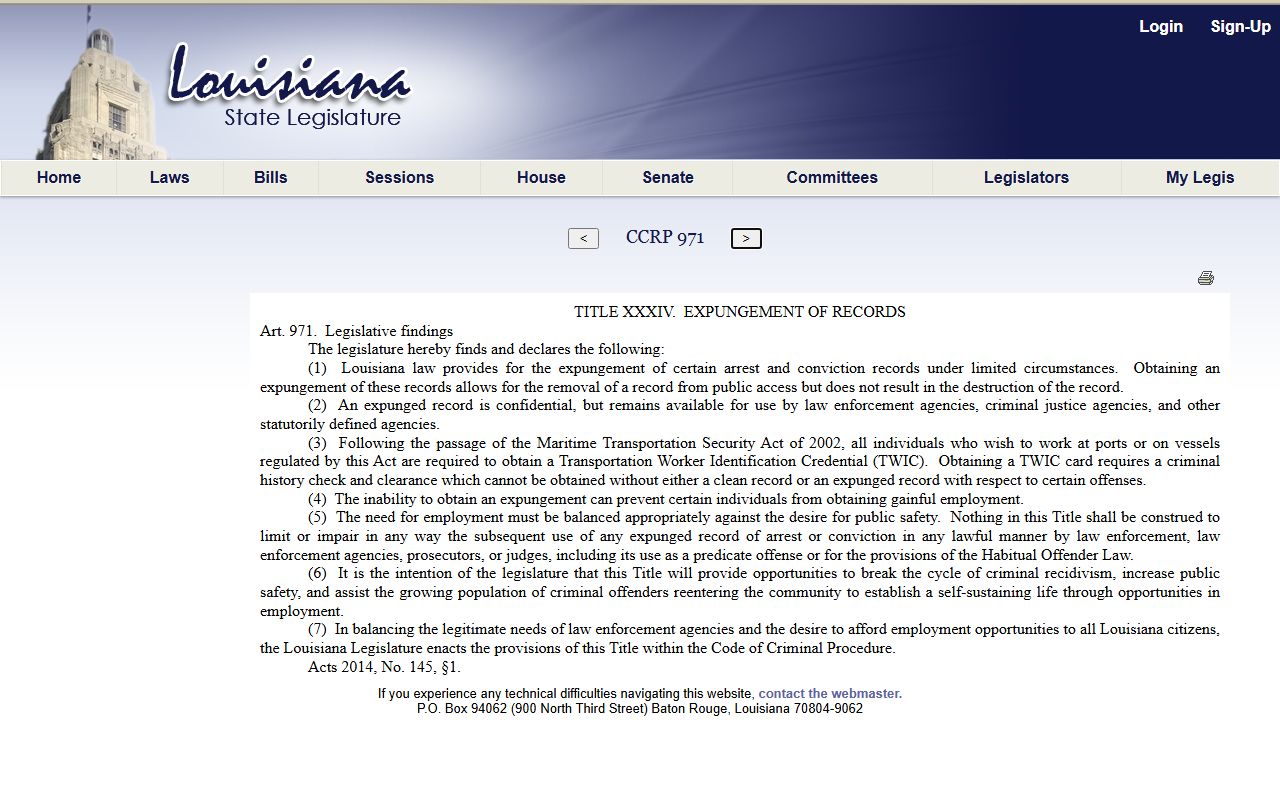
That definition is crucial because expungement does not erase the record for every criminal-justice purpose.
Restricted Jefferson Davis Criminal Records
Juvenile criminal records are the clearest restricted category. Louisiana Children's Code art. 412 makes records and reports concerning juvenile court matters confidential except for traffic violations and authorized disclosures. The 31st JDC schedule lists juvenile court on Monday afternoons, but that schedule does not make juvenile files public.
Expunged records, sealed records, records with protected personal identifiers, and some active investigative material can also be withheld from ordinary public access. If a criminal search returns nothing, that does not prove no event ever existed. It may mean the wrong office was searched, the record was restricted, or the case is under a different name, number, or court.
Important: Criminal court records should not be used for employment, tenant, credit, or insurance screening outside FCRA-compliant processes.